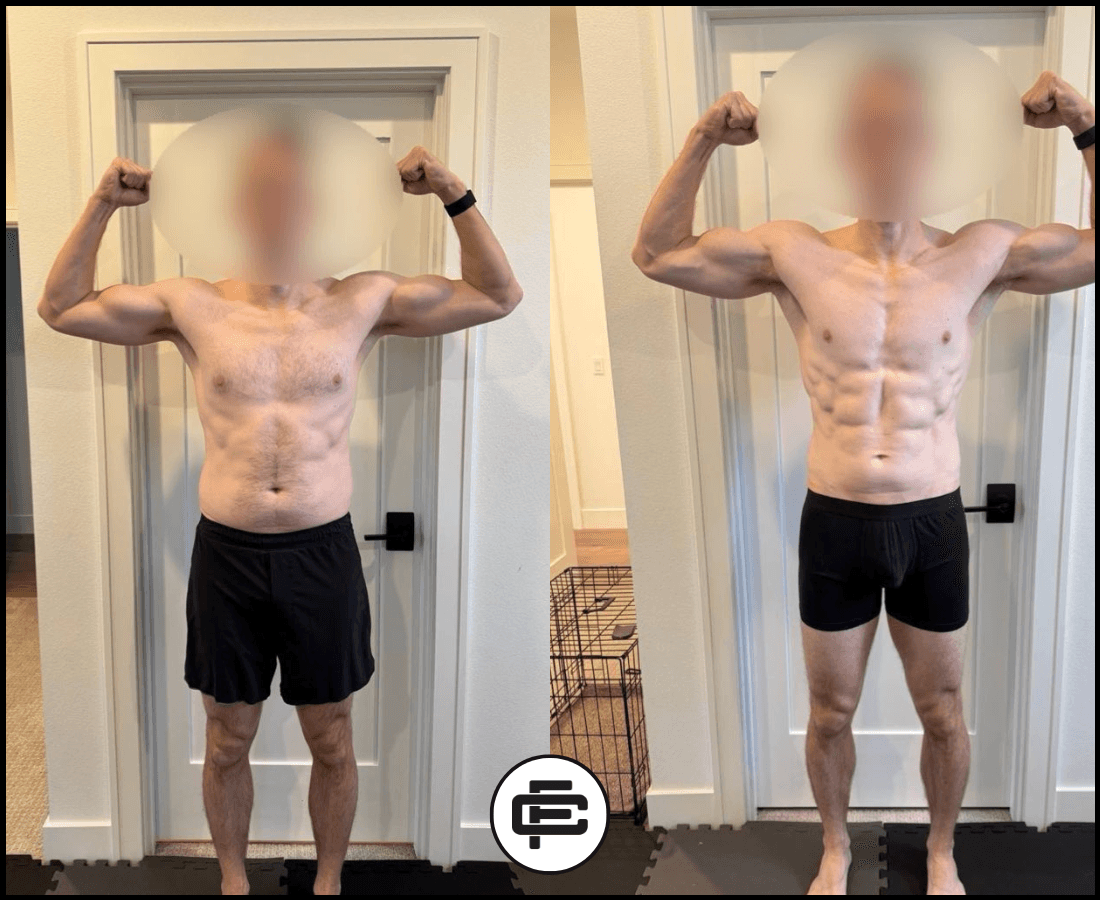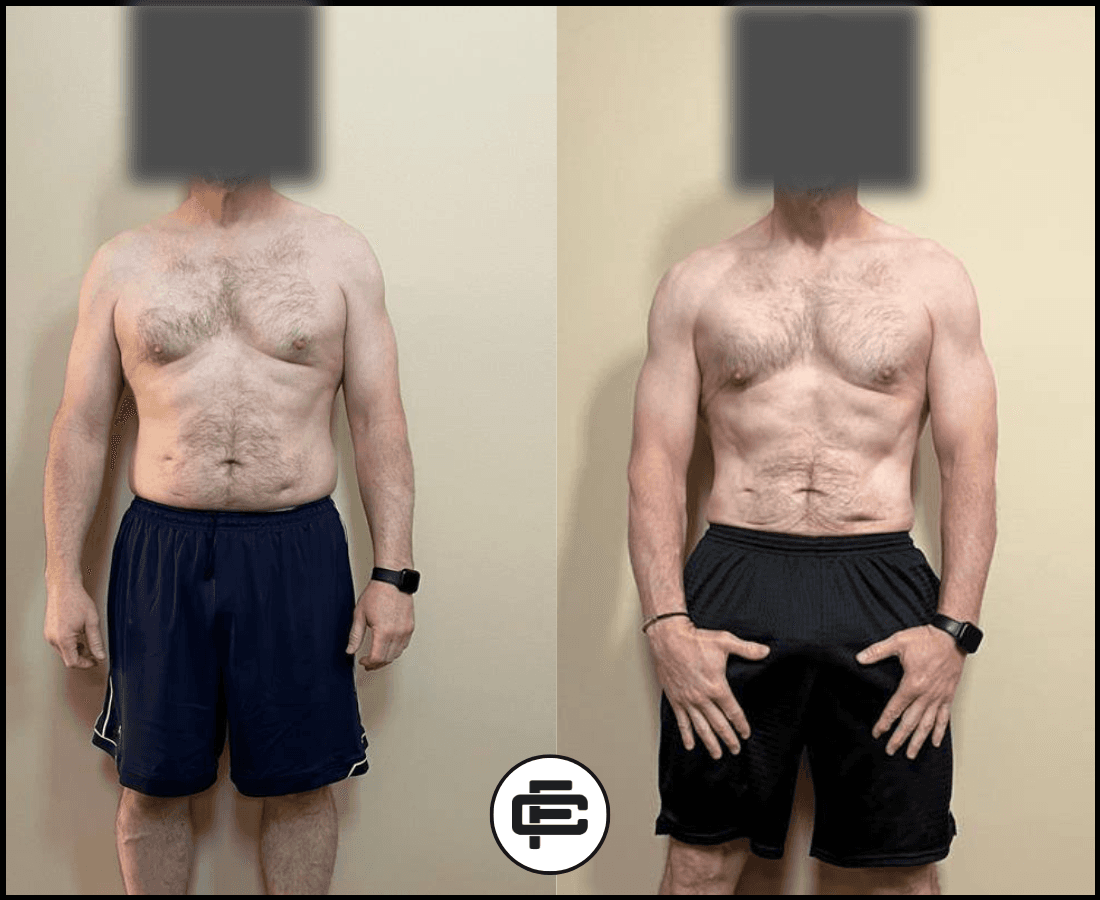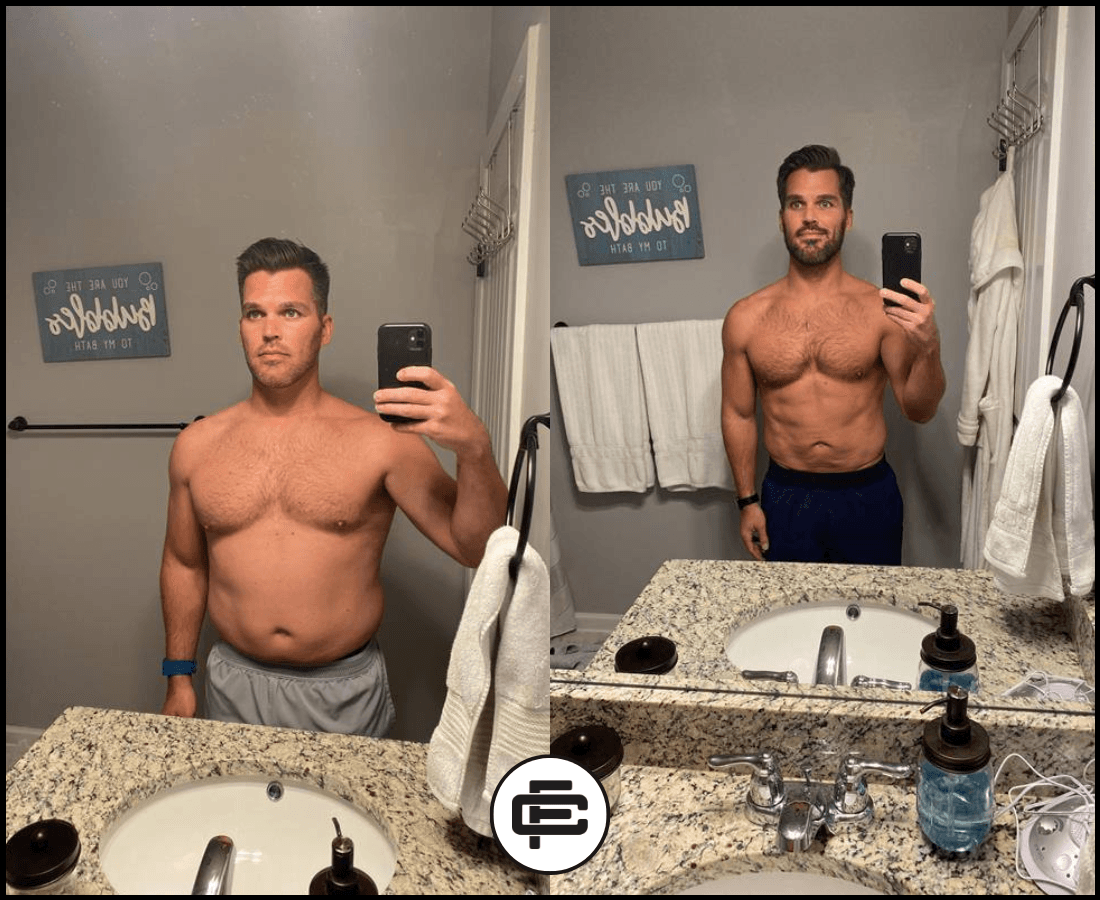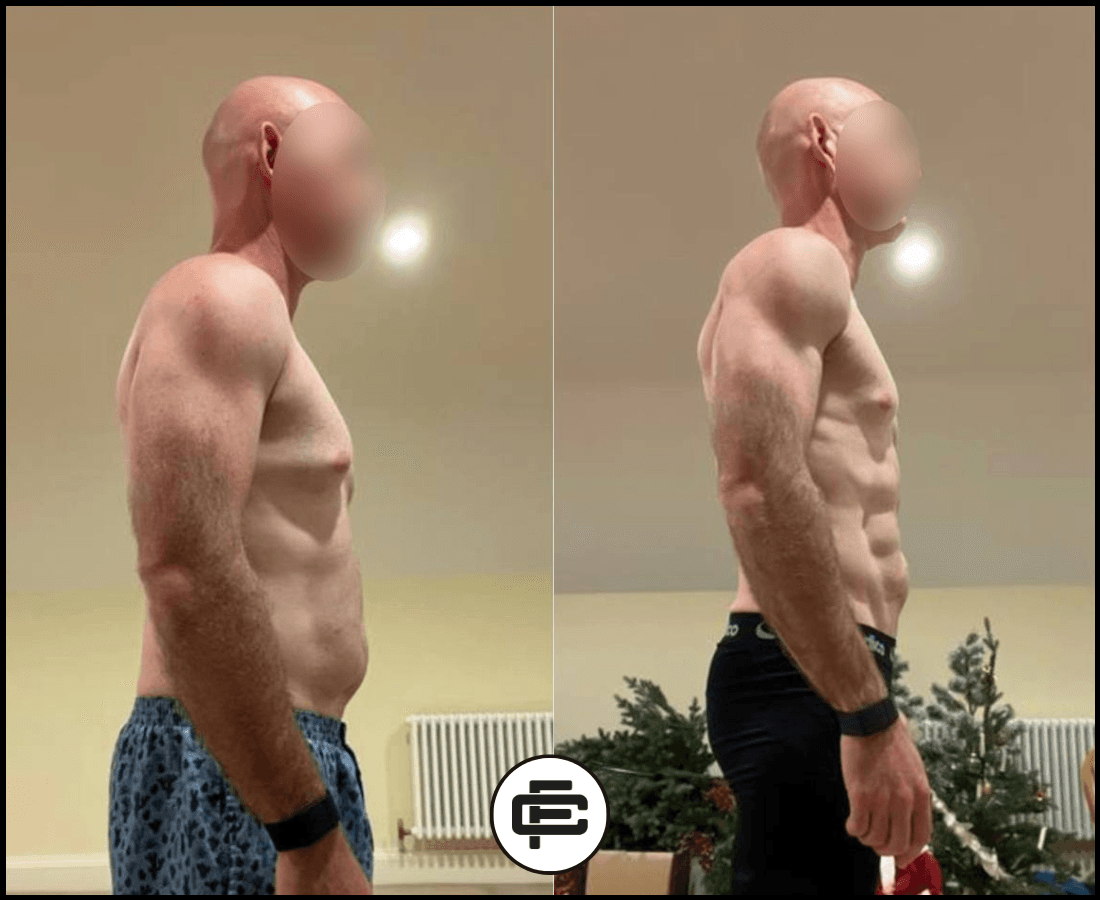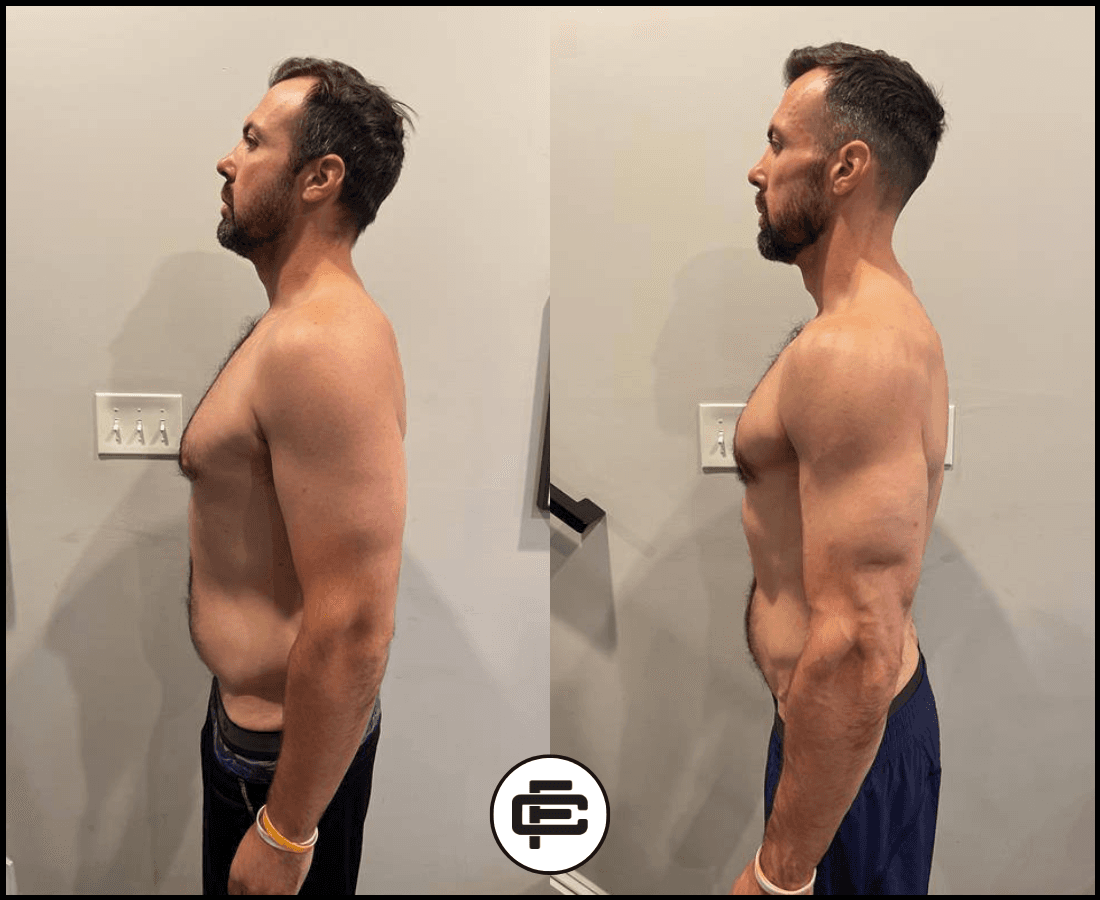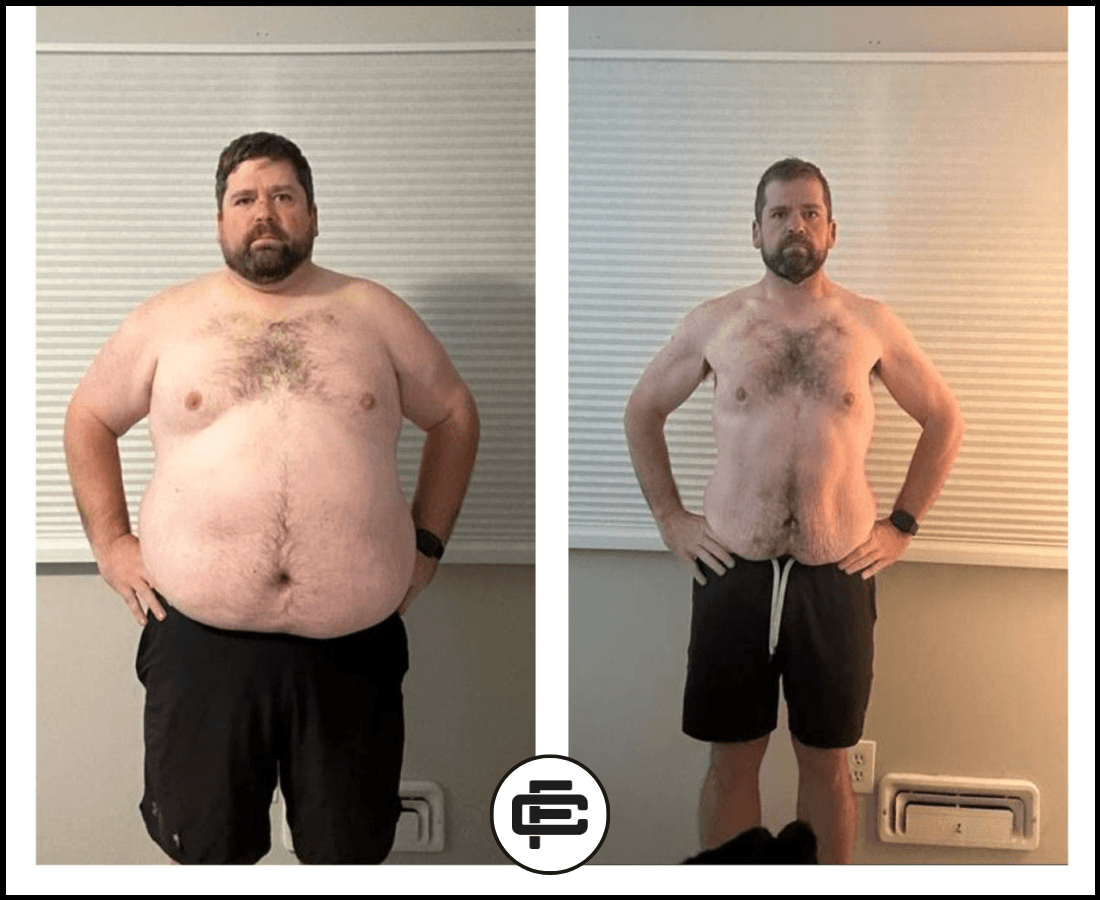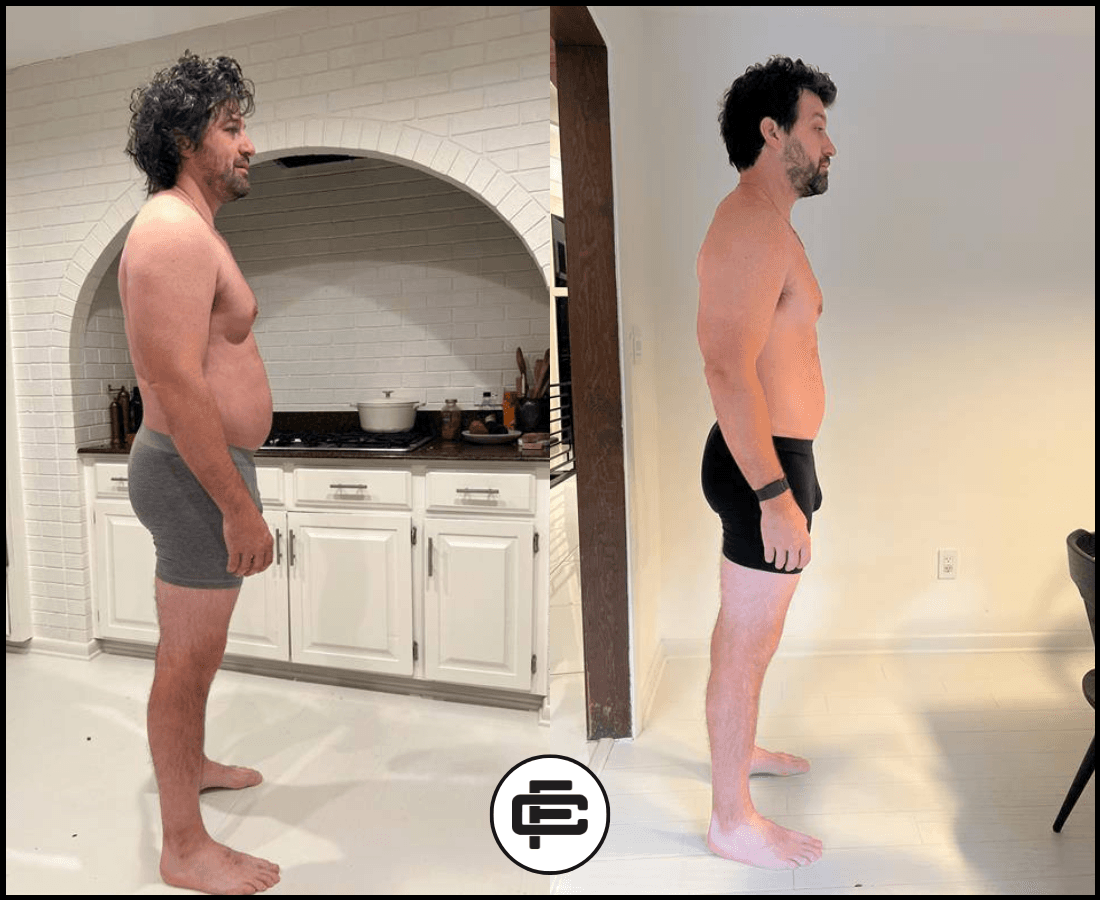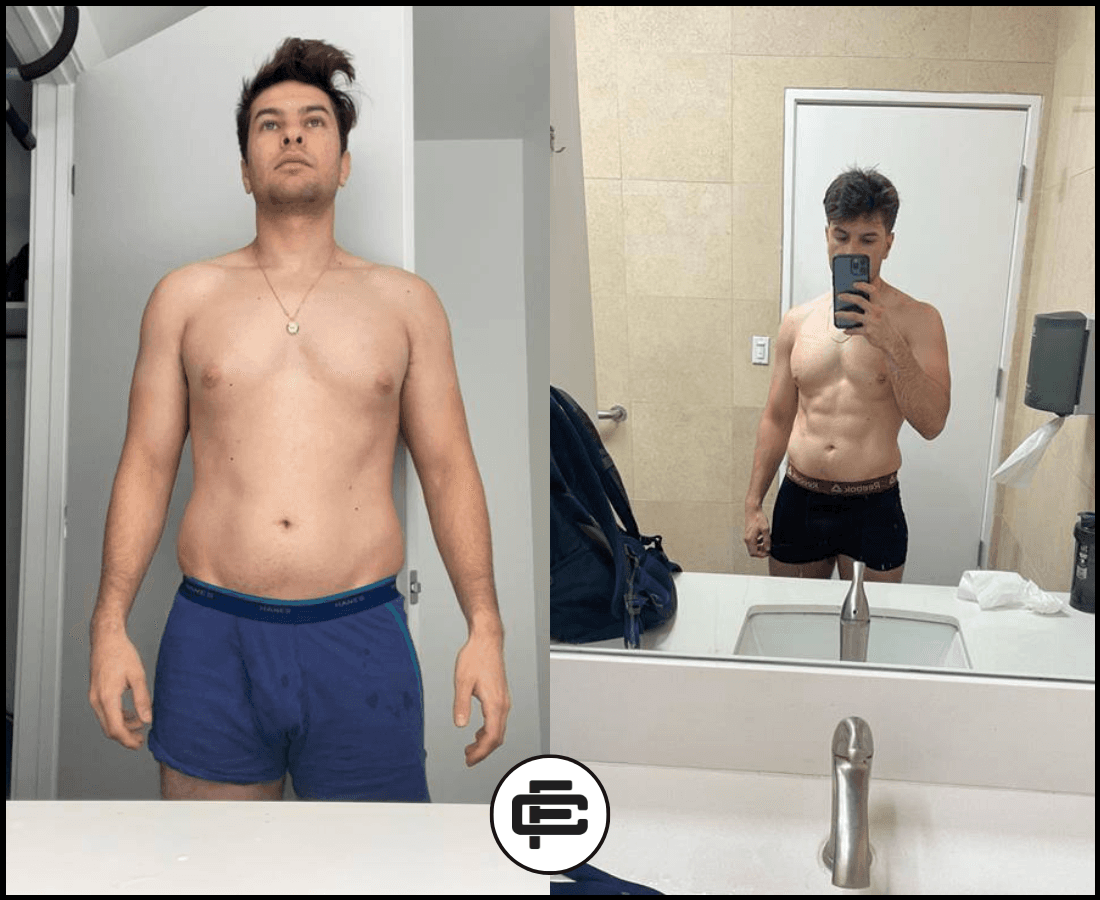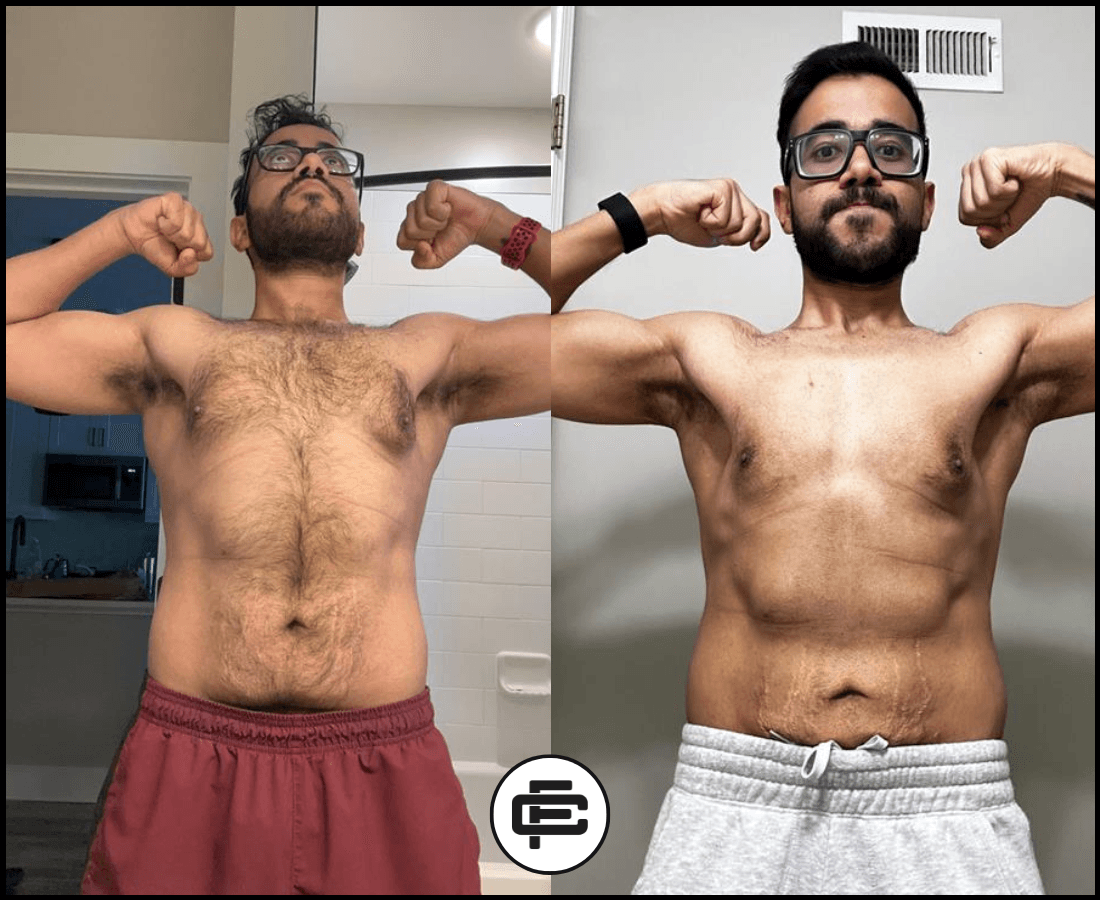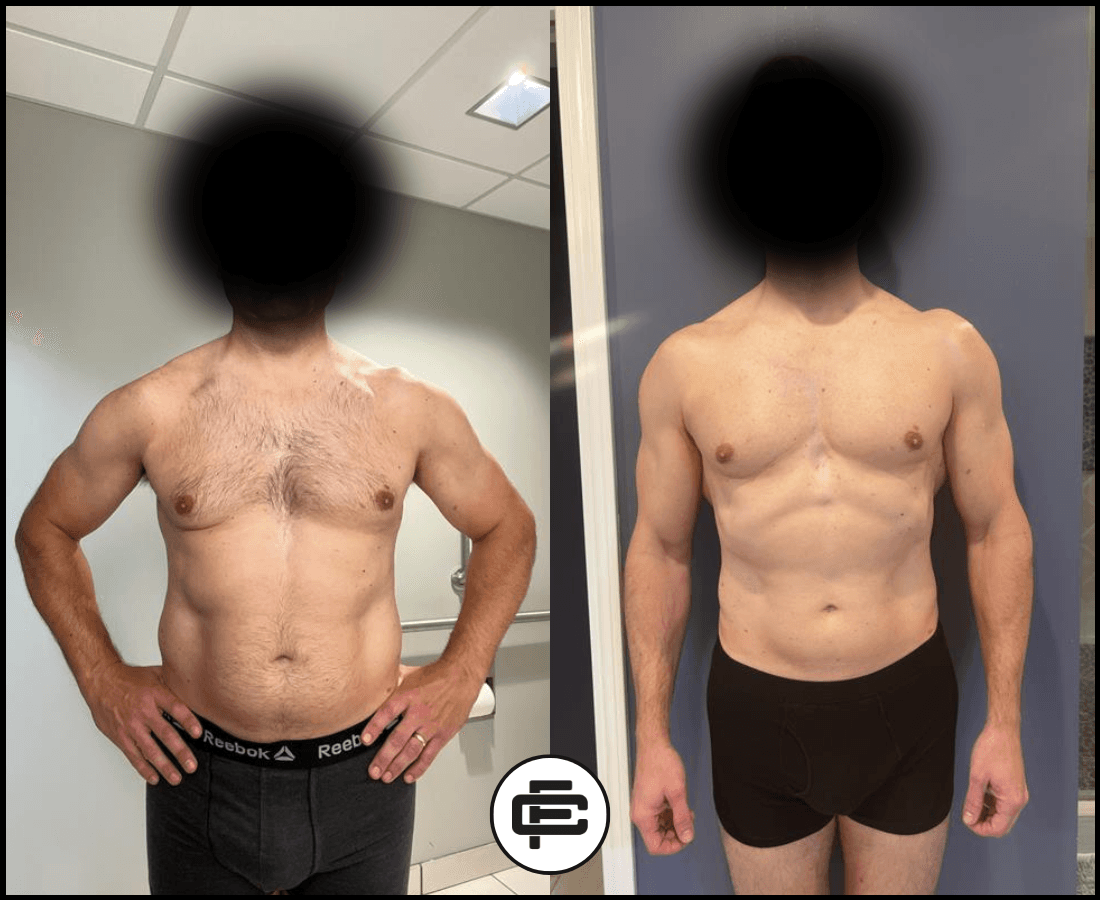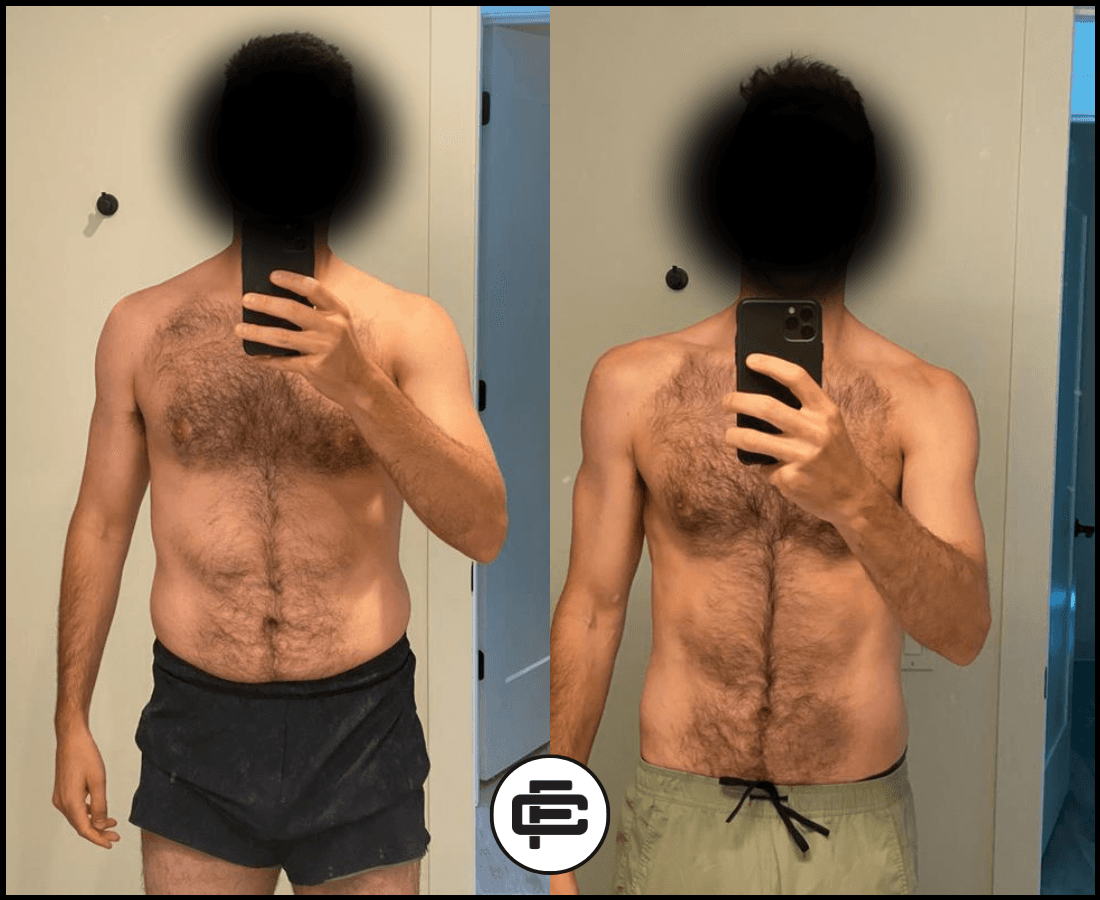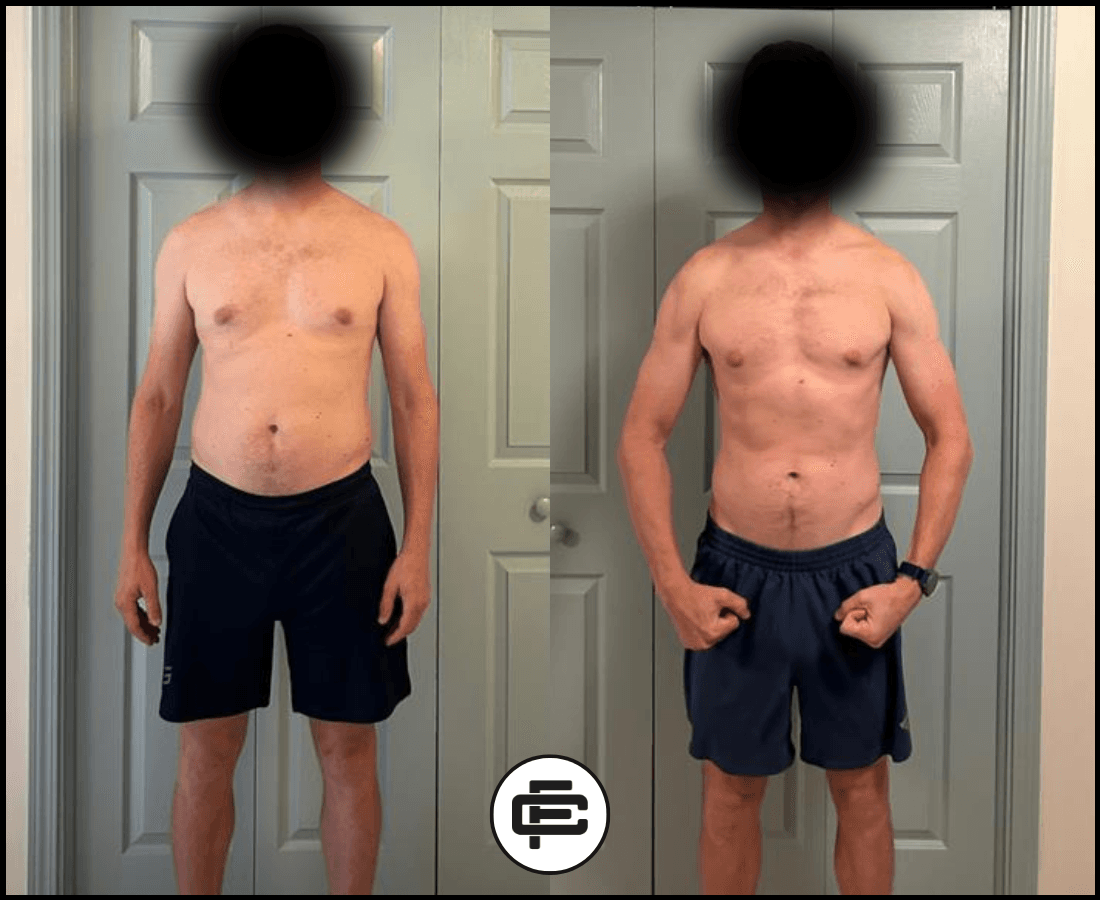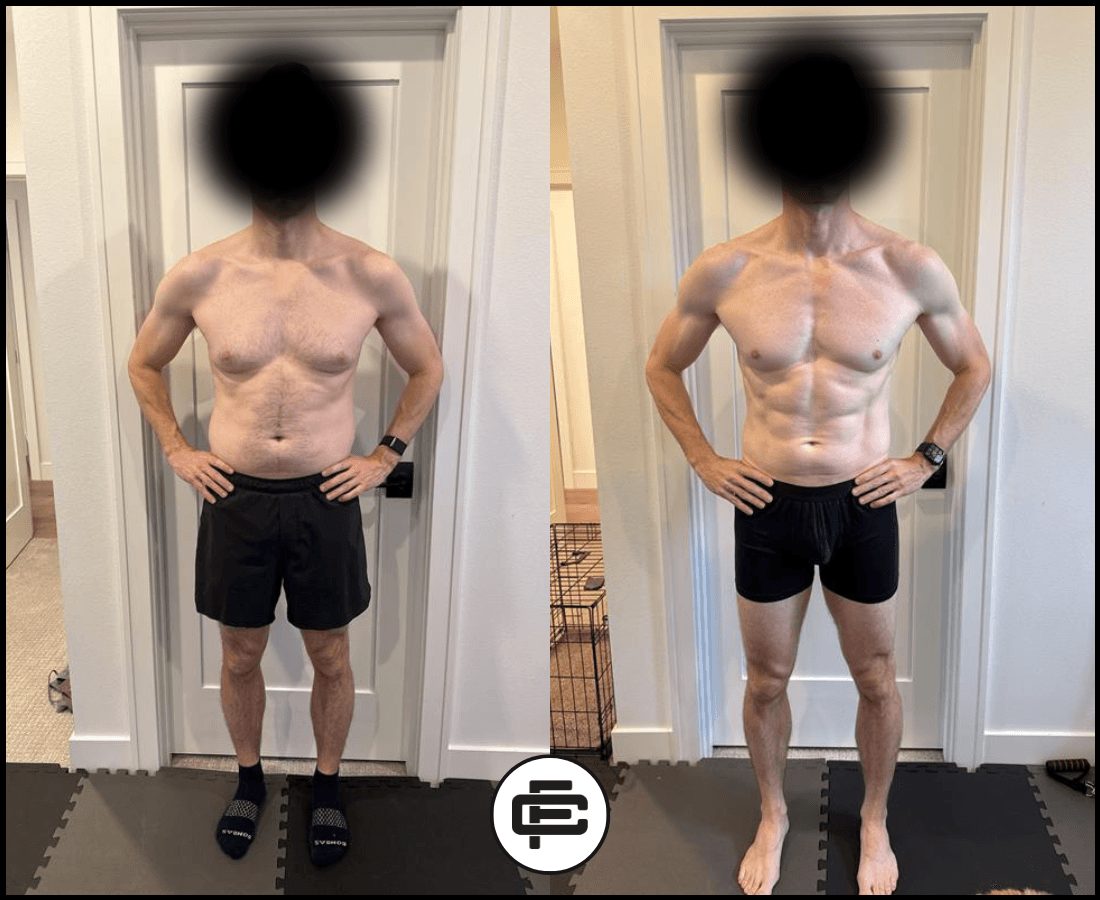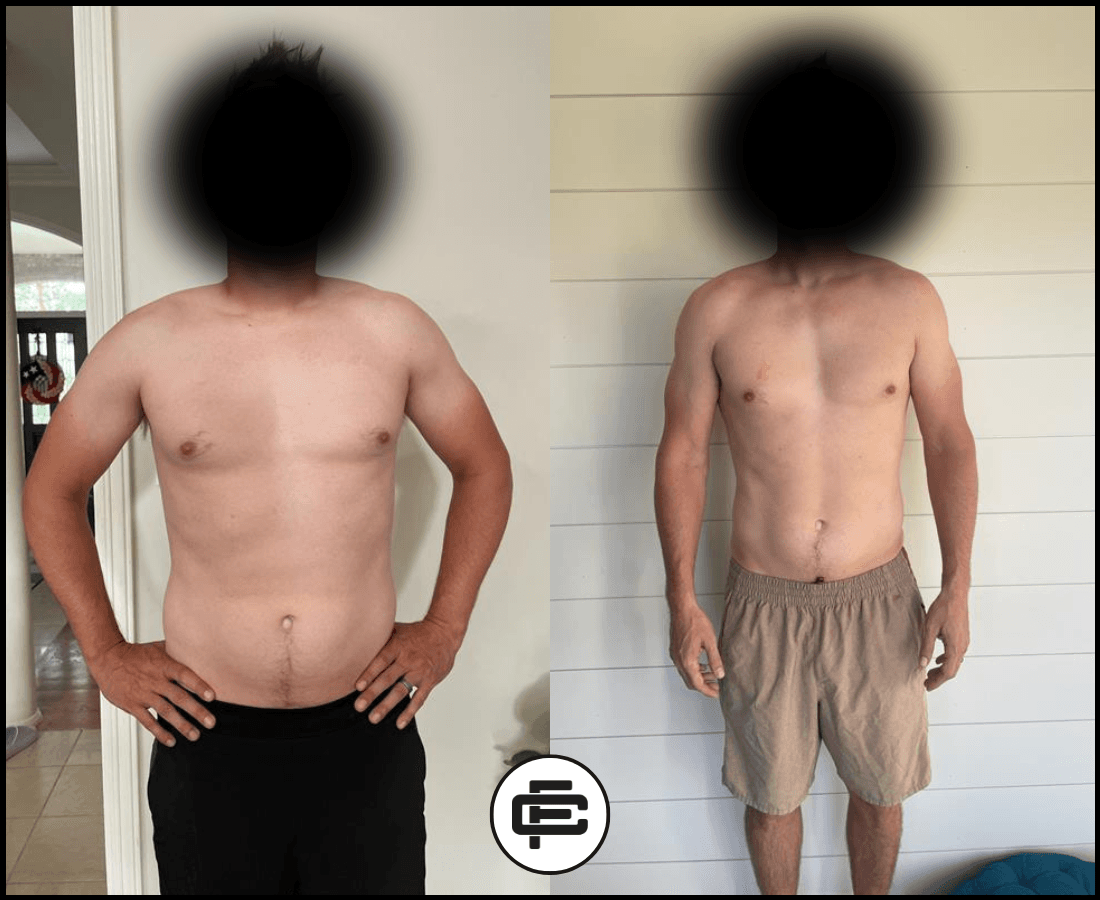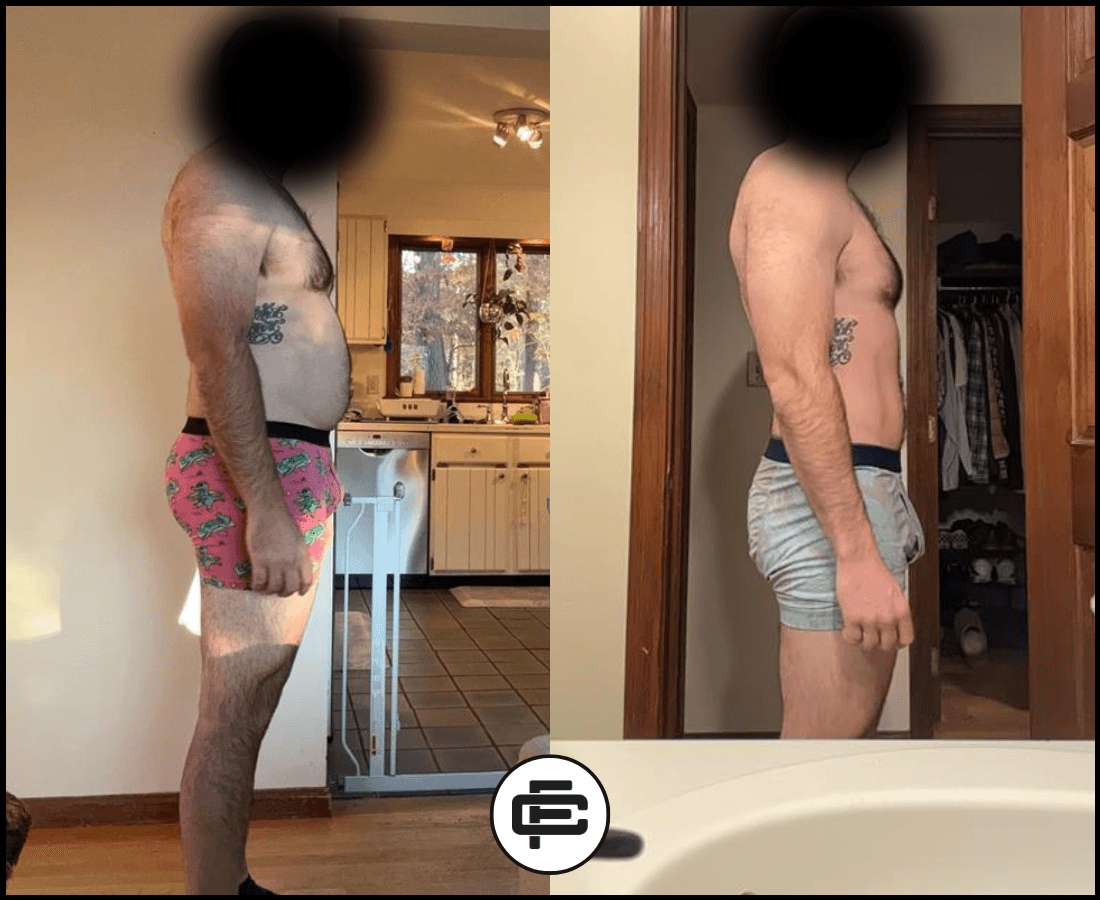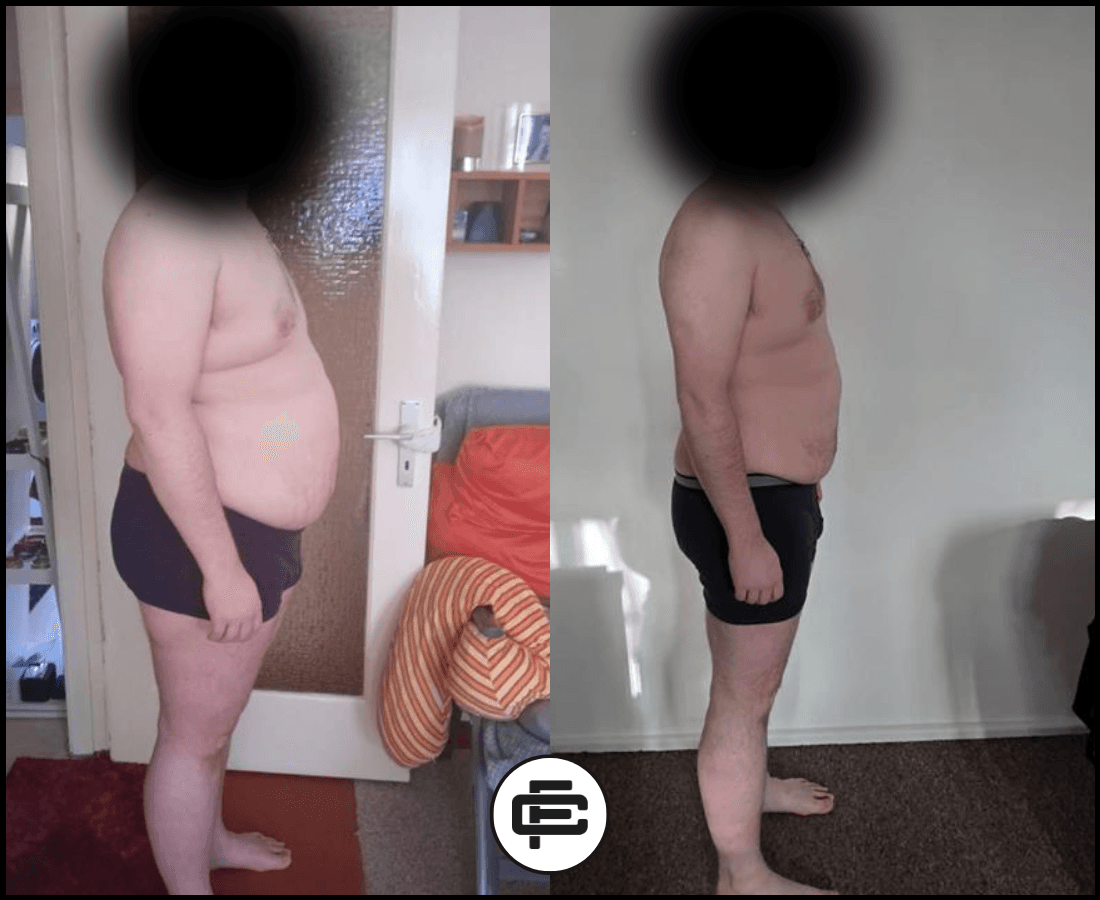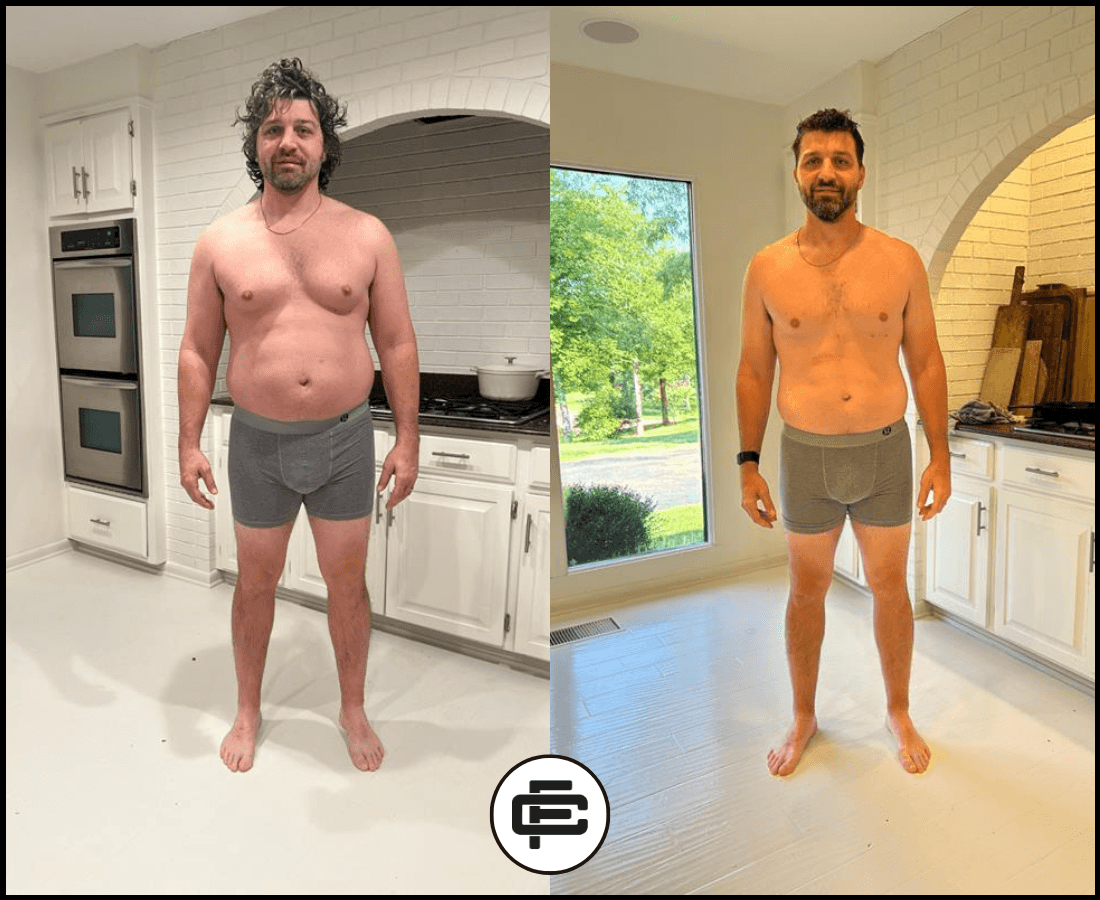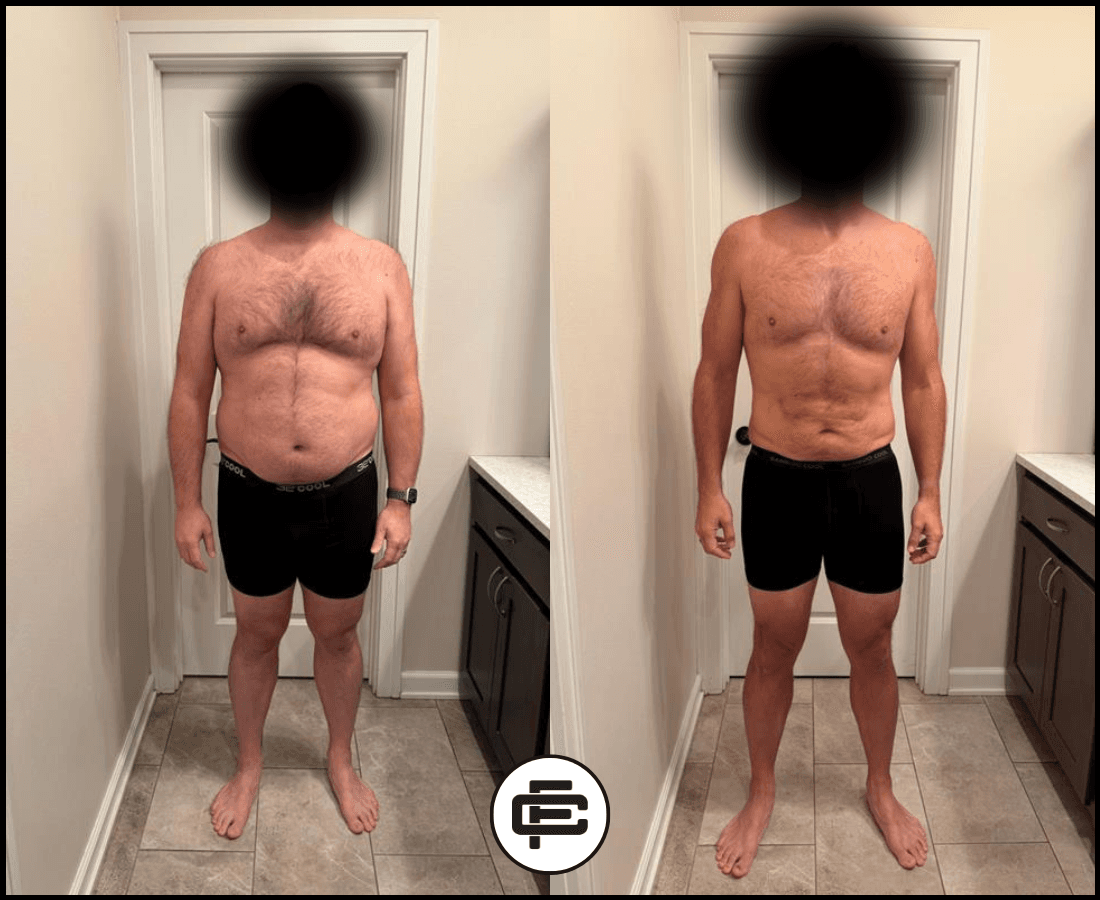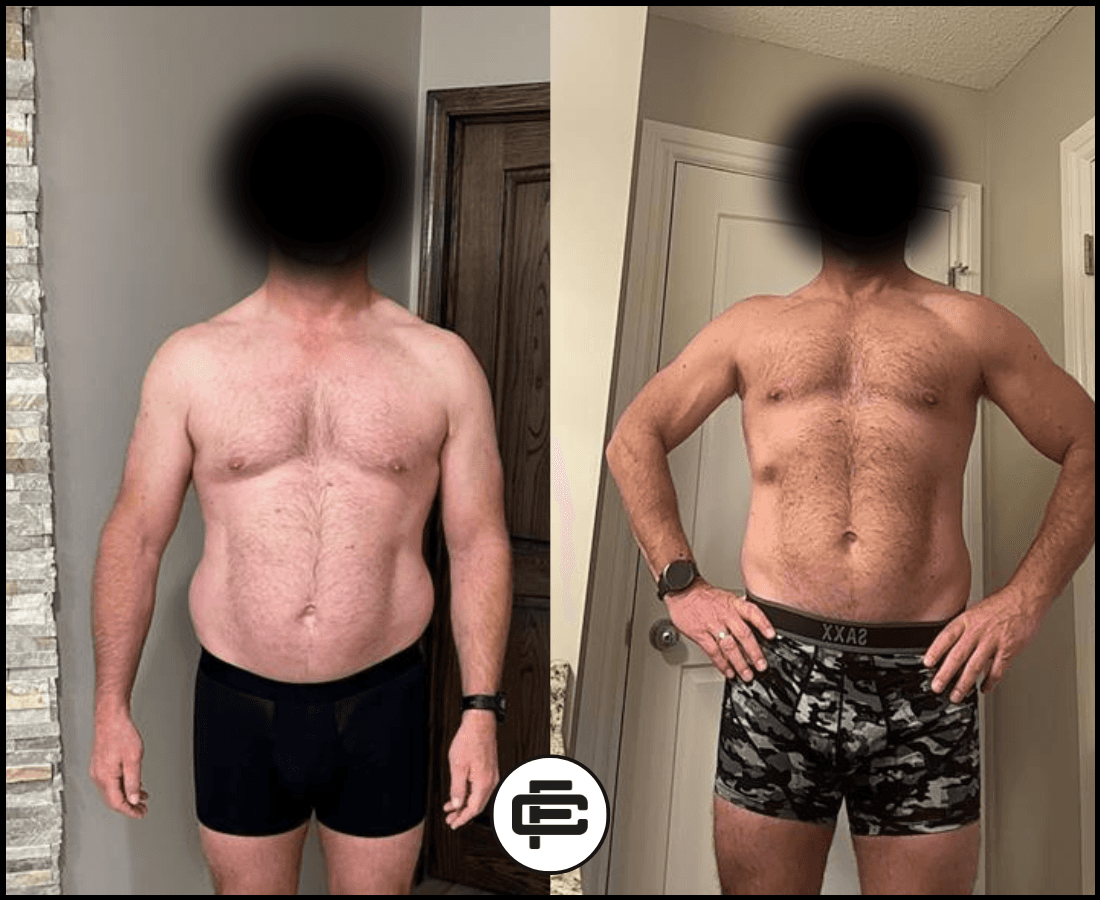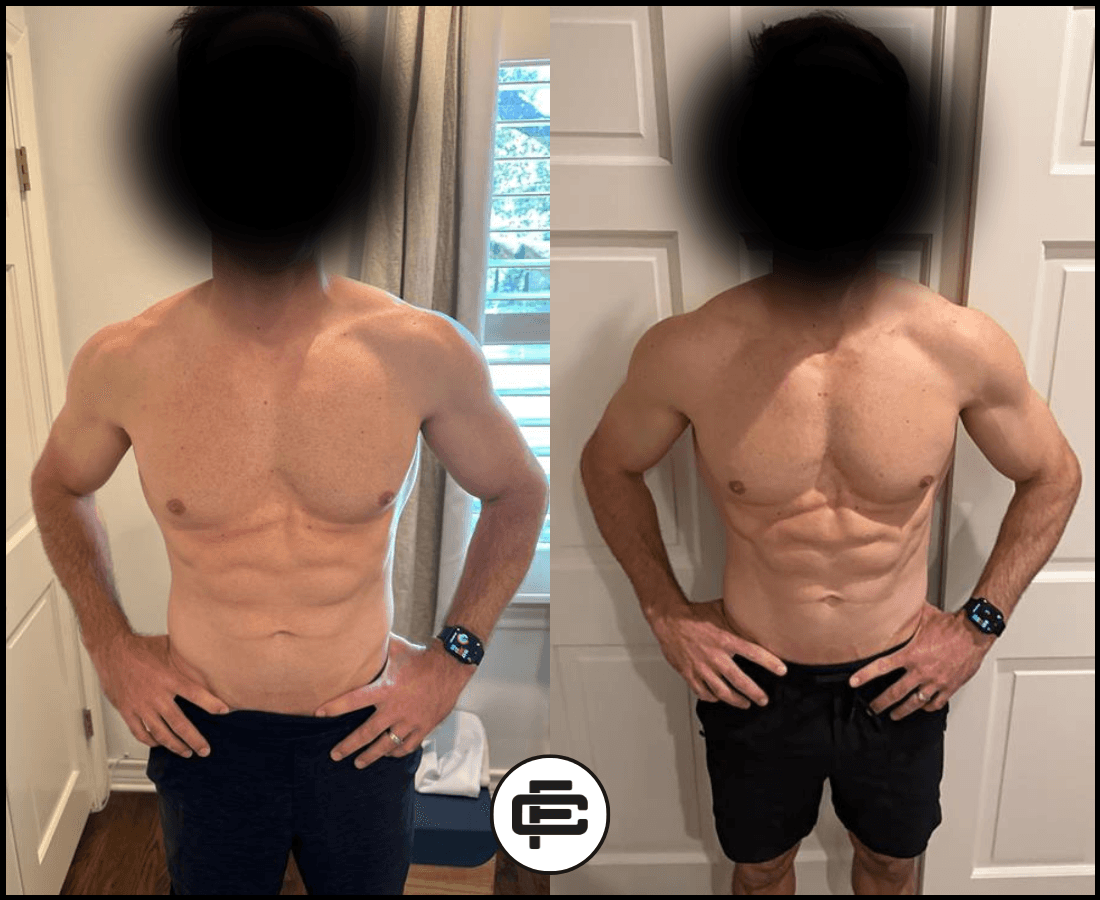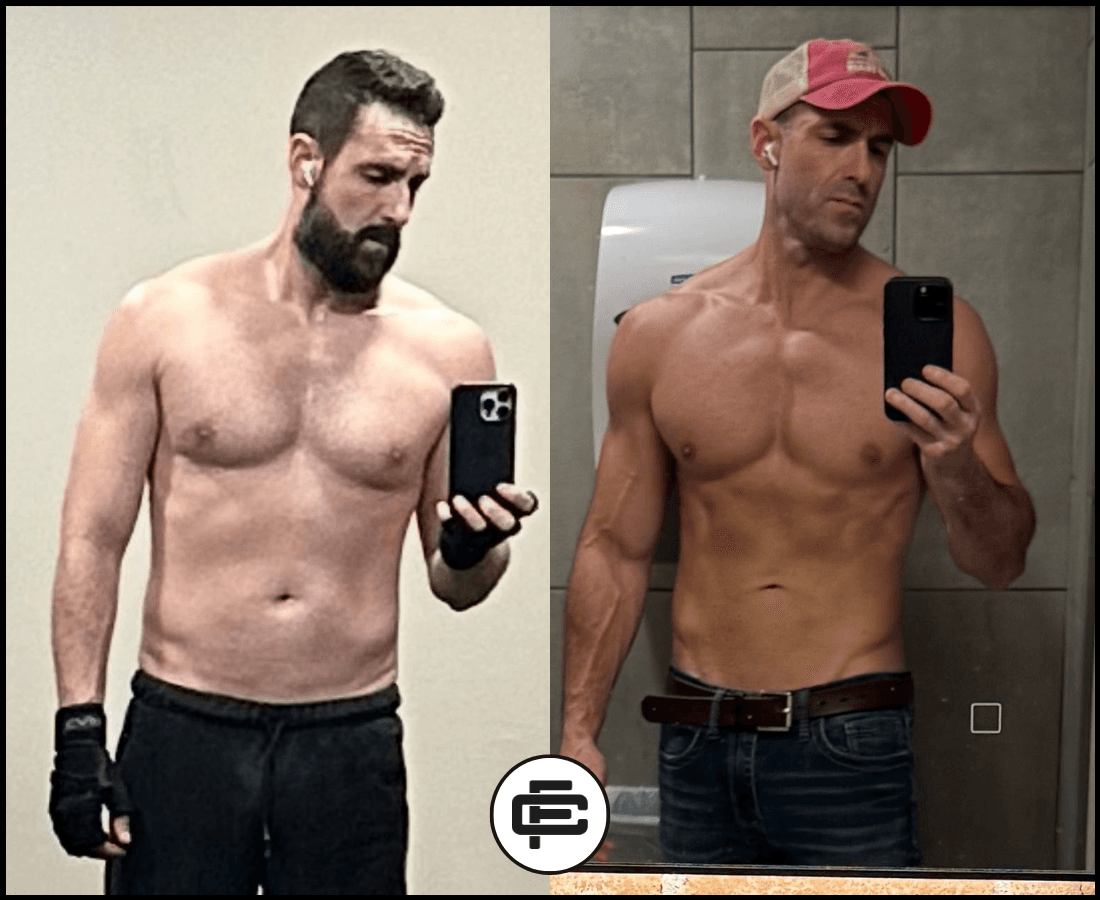
The coaching that gets you lean covers all the variables the body responds to. Calibrated weekly against your data.
Five places the body is leaking under the load. Most coaching touches one of them.
You drink coffee through most of the day just to stay sharp. By 3pm the focus drops, by 5pm you’re running on fumes, and you still have hours of day left.
Five days a week in the gym for months. The scale hasn’t moved and the mirror hasn’t changed. You’re putting in the work and the plan isn’t getting you anywhere.
You feel the 2pm crash. You second-guess decisions you would have made fast a year ago. The edge you had at 30 is gone. Sleep, steps, and hormones run cognition, and most coaching never looks at them.
There’s the photo you didn’t post and the moment you caught your reflection and looked away. The longer it sits, the heavier it gets.
By the time you get home, you’re drained. You want to be present and you can’t manage it. The people you love are getting the version of you with nothing left to give.
You’ve built systems in every part of your life except this one.
Your body runs on five variables: training, inputs, recovery, movement, and accountability. The best results come from coaching all five together.
Your system gets built around all five and tuned to your body, your data, and your real week. Recalibrated every week.
Programmed for your body, your gym, your calendar. Form review on the lifts that matter when something looks off. Adjusted weekly from logged performance.
Targets get set against your real week and your tracked data. Labs come in when something needs to go deeper. Restaurants and travel are part of the plan. Foods don’t get banned. Numbers get adjusted from data, weekly.
Sleep regulates ghrelin, leptin, and the hormones that drive hunger. Stress regulates where you store fat. Both get audited in week one and tuned weekly.
The other 15 hours matter more than the one in the gym. Non-exercise movement is 15–30% of your daily burn. Your target gets set against your real week, not against a generic number.
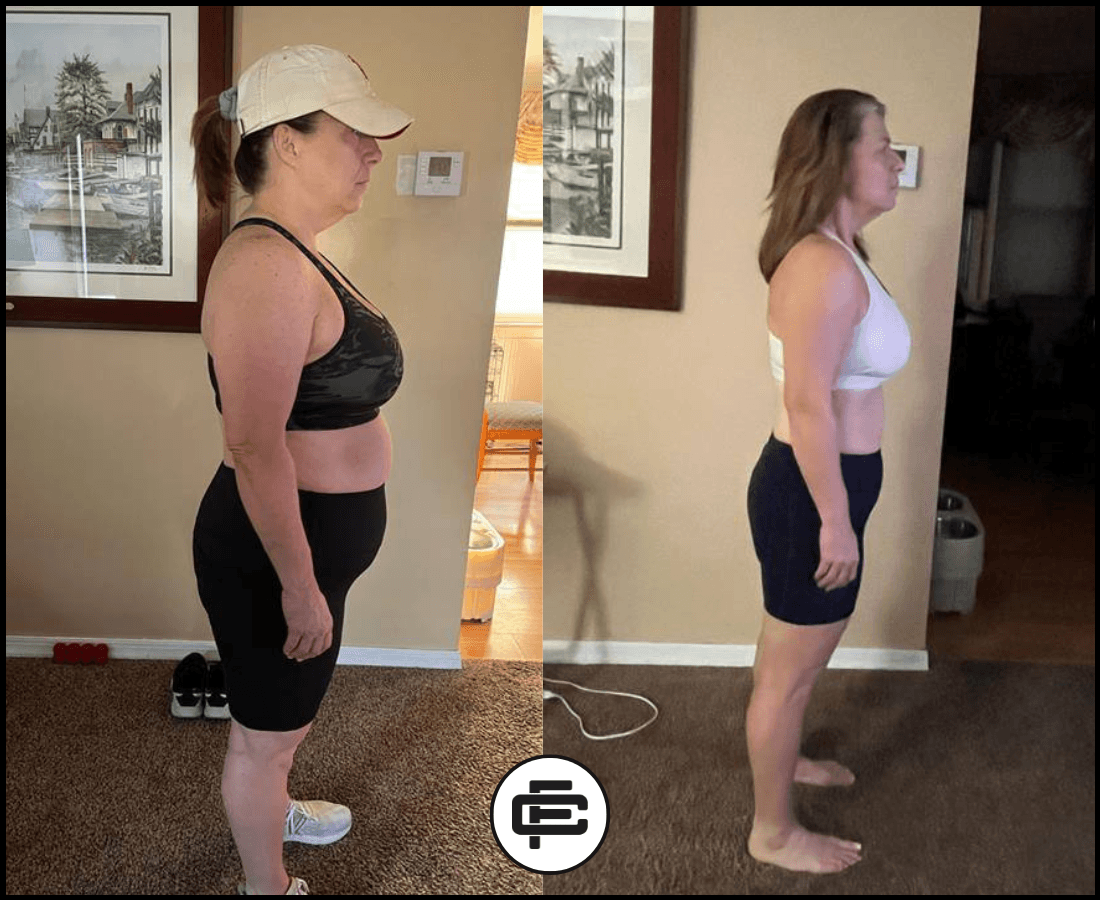
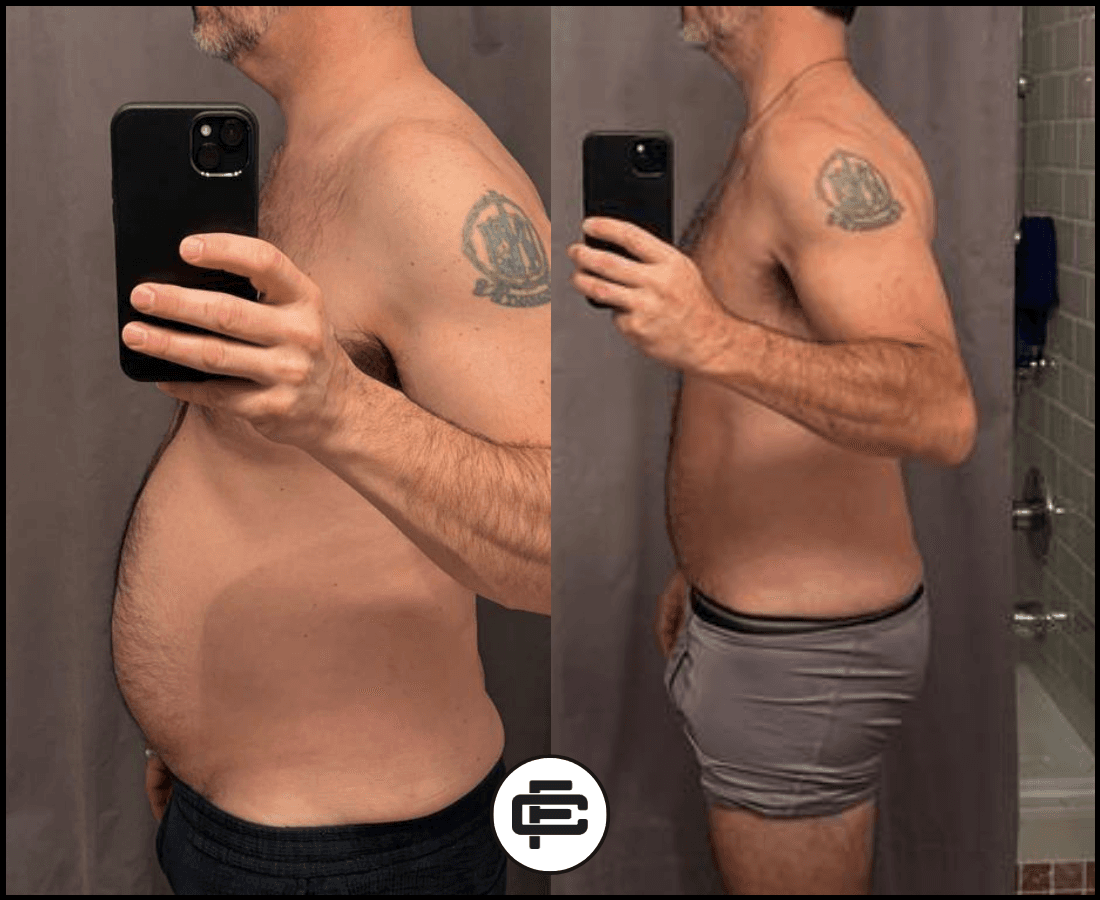
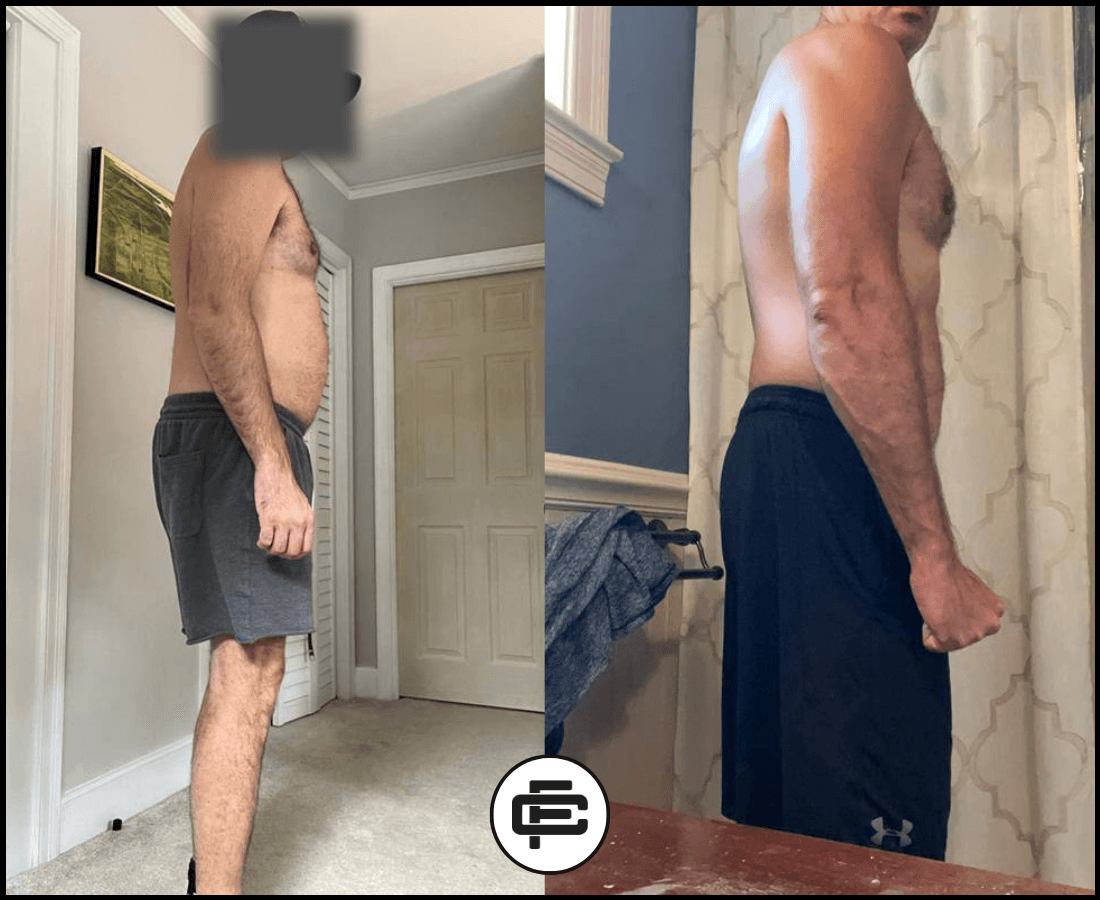
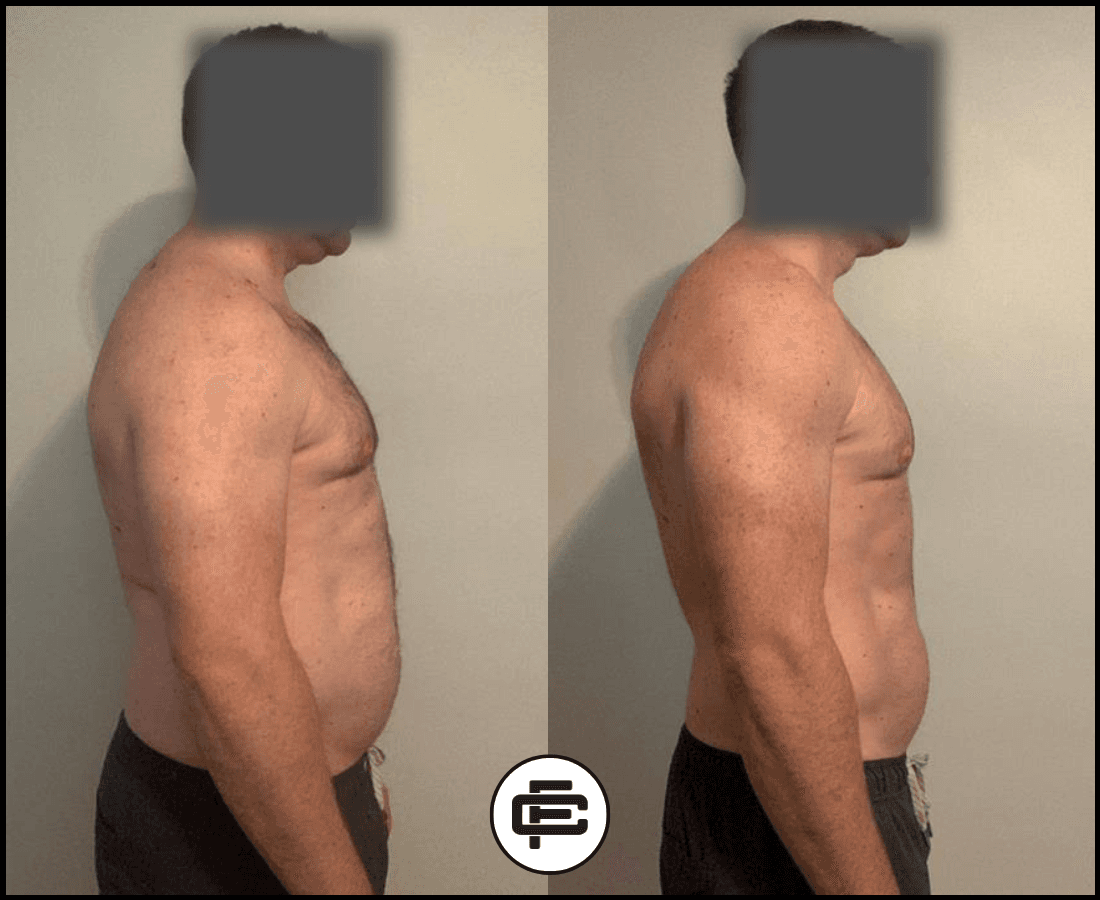
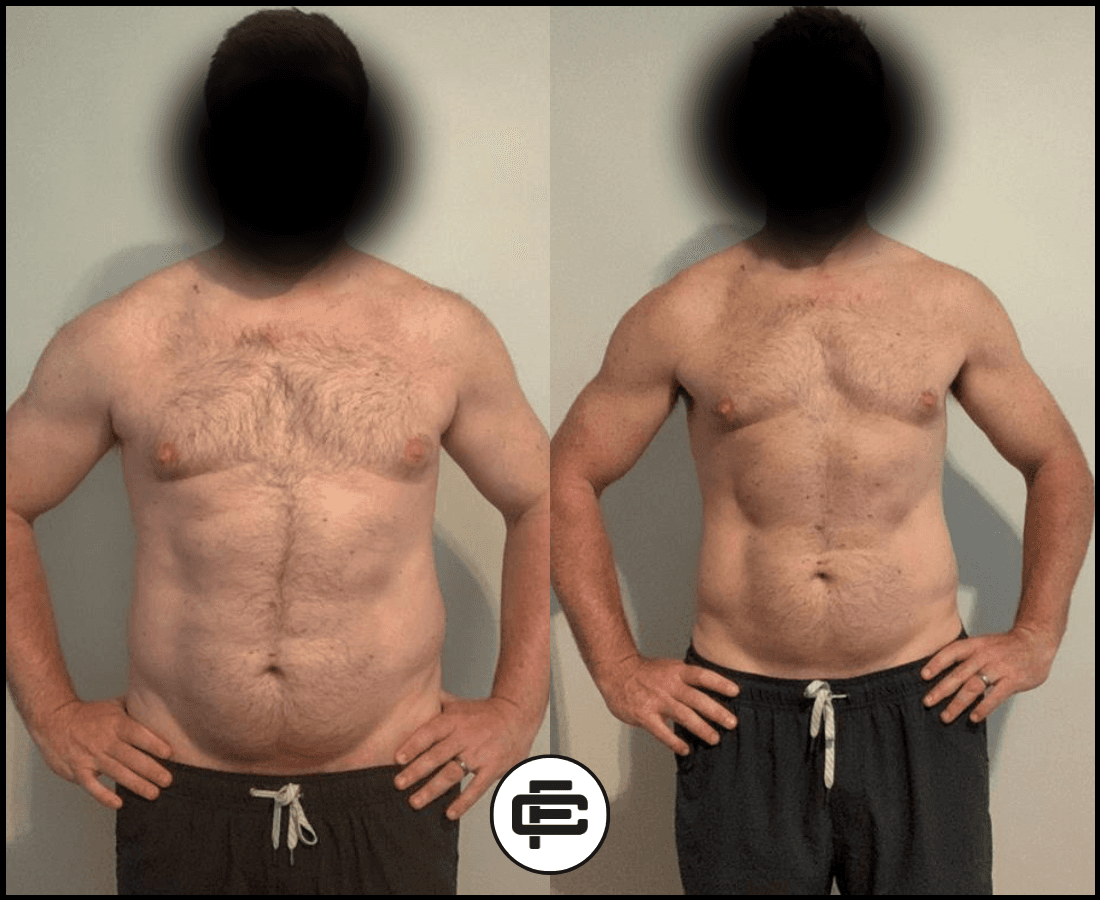
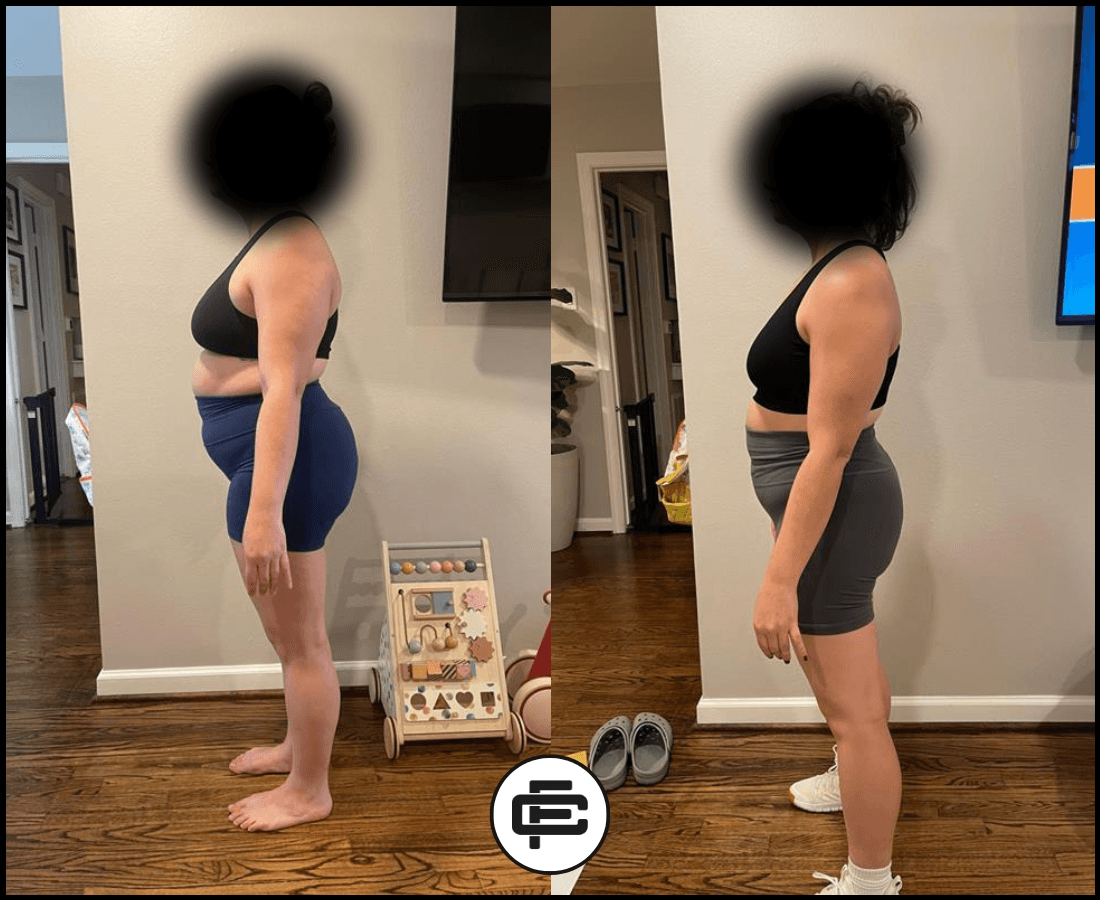
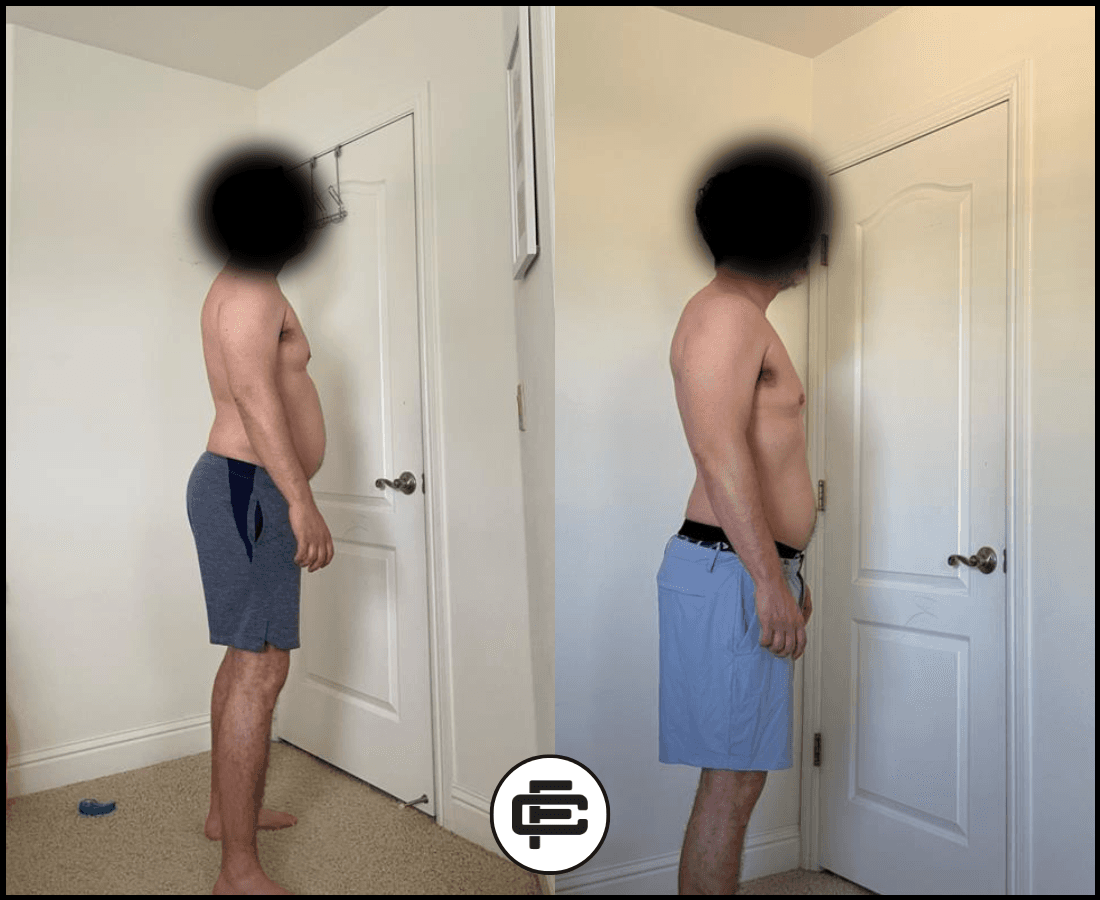
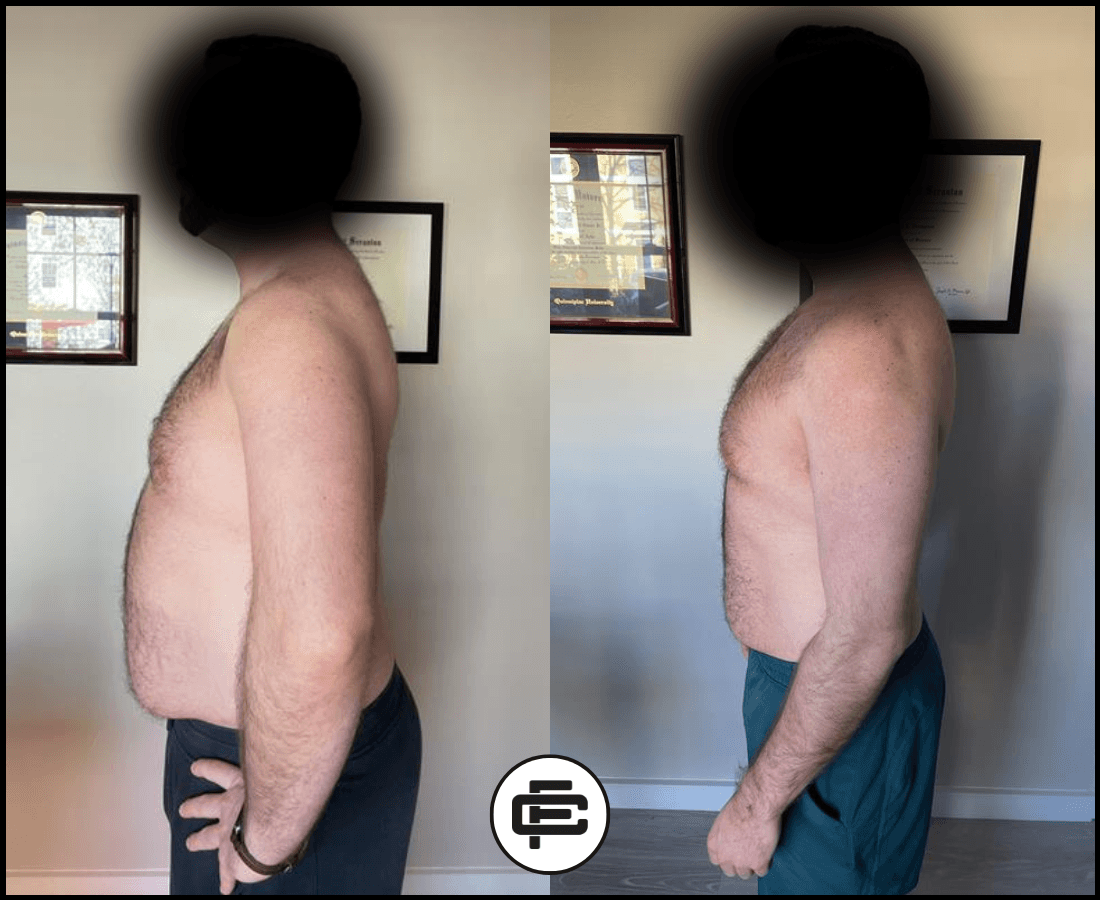
We check in three to five times a week, review logs within 24 to 48 hours of submission, and pull side-by-side photos every two weeks. If something slips, it’s caught before the week is over.
Clients I’ve coached alongside their physicians:
Not a doctor. The coaching covers training, food, sleep, and recovery. When labs are part of the picture, the protocol gets calibrated against them and your physician’s care.
Custom plans and “science-based” coaching are table stakes. What you’re paying for at this tier is the review cadence. The time between your data hitting Chace and the plan adjusting around it.
“Dad of four, full-time job, and still dropped seven percent body fat in three months.”
Half of applicants are better served by a cheaper program. I’d rather tell you that on a 20-minute call than take the check and hope.
Inside the Chamber, every part of the system has a deliverable, a frequency, and a person responsible for it.
A weekly check-in call with Chace to review your week and set the plan for the next one.
Direct access between calls. Same-day response, every weekday. [VERIFY channel: Voxer / Slack / text]
Programmed for your body, your gym, your calendar. Form review on the lifts that need it.
Built around your real schedule and tracked data. Recalibrated weekly from what’s logged. Labs shape the protocol when they’re part of the picture.
If something looks off under the hood, bloodwork gets pulled and read. Thyroid, insulin, hormones, gut, inflammation. The protocol adjusts to what the data says. Not every client needs this.
Graduate with a written maintenance protocol and lifetime access to the alumni roster. You don’t lose the system when you leave the seat.
By application only

I spent years grinding through sets in a gym five days a week, watching my body look identical to where it started. I tried internet programs. I tried diets that lasted two weeks. Six months in, the photo and the shirt looked the same as the day I started.
There were mornings I’d take a progress photo, hold it next to one from a year before, and feel my throat tighten. The science degree and the work ethic weren’t moving the body. Nothing was.
A professor in my exercise science program at Iowa State had reframed the problem years before. Most fitness advice is incomplete. One variable at a time can’t solve a five-variable equation. I’d memorized the words for an exam and missed what they actually meant for years.
The work goes deeper than macros. When something needs investigating, I pull labs that cover thyroid, fasting insulin, sex hormones, inflammation, and gut symptoms, then build the protocol around what your body is actually doing. A lot of clients arrive with a piece that has been quietly broken for years. We find it before it shapes the next year of training.
That was ten years ago. The work since has been simple to describe and brutally hard to execute. Screen for what’s quietly broken. Run the system honestly against your data, every week, until it moves.
The 200+ clients I’ve coached since look a lot like I did then. High-functioning everywhere else and stuck on the body. Different ages and careers and starting points, same pattern every time. The system was always incomplete. Effort had nothing to do with it.
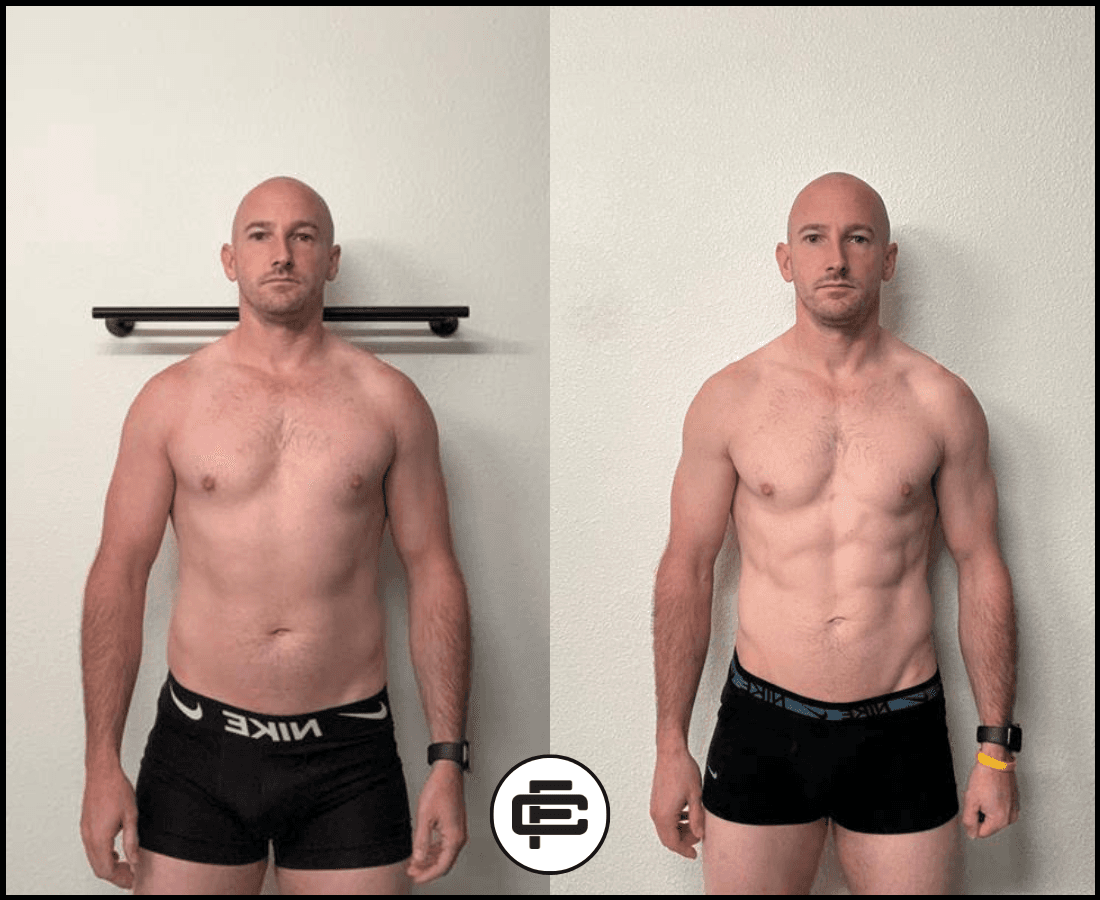
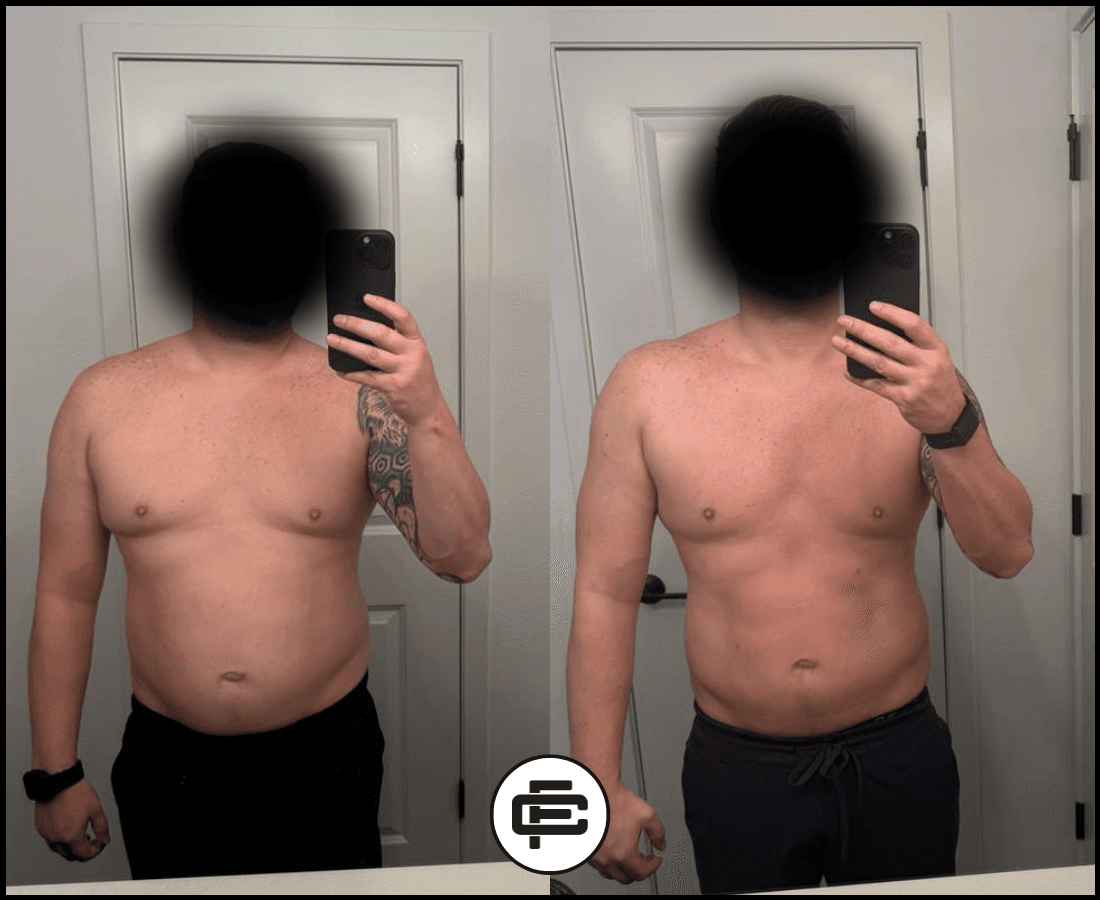
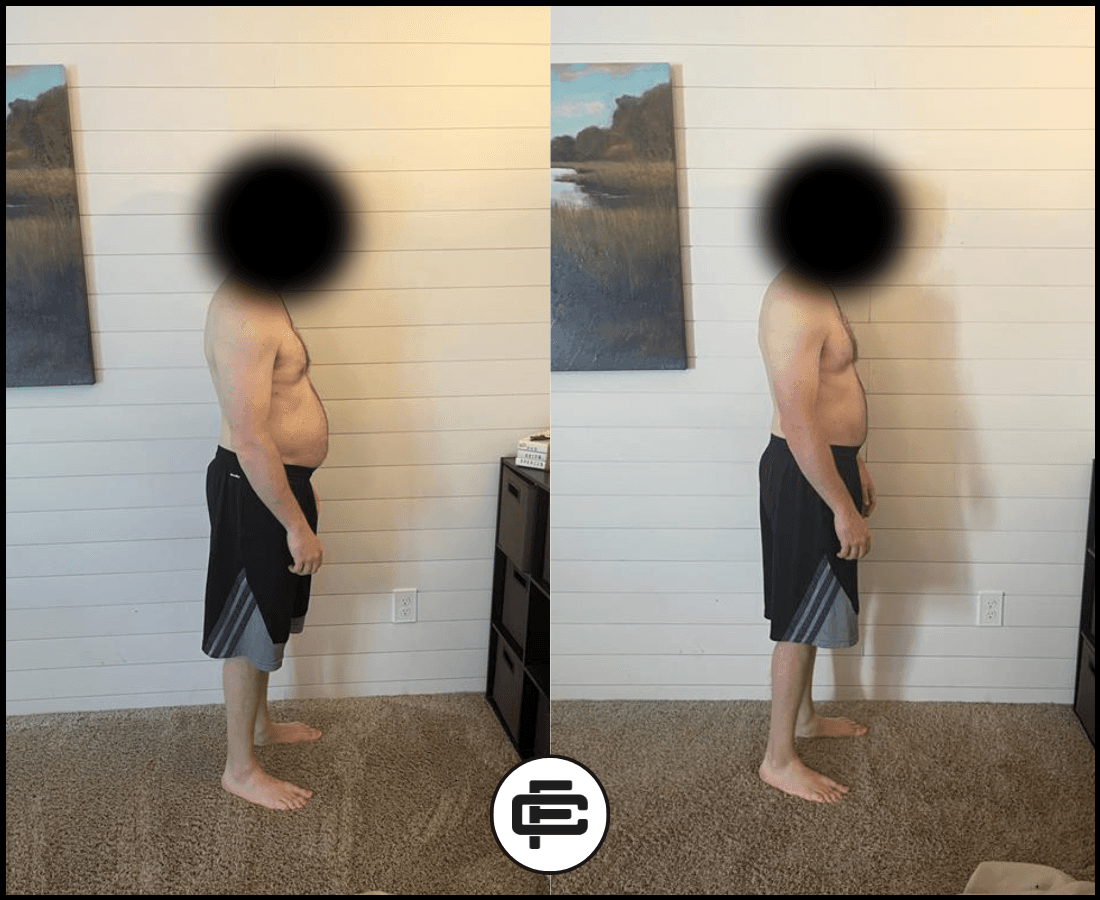
In their words


What clients arrive with
Short form, 2 minutes. Real context: your history, your goal, your schedule. Reviewed within 48 hours.
A call with Chace, focused on diagnosing what’s actually wrong. No pitch. You leave with the read whether or not we end up working together.
A full intake. We map your history, your goal, your real schedule, your GI symptoms, your sleep, and your stress load. If something looks broken upstream, we pull bloodwork to see what’s going on under the hood. The protocol gets built around what we find.
Daily access between calls, weekly adjustments from your logged data, and form review when something looks off. Nothing in the program is left to improvisation.
A written maintenance protocol, alumni access for life, and a framework that holds after you leave the roster.
Show up and log everything and follow the protocol. If we hit week 8 and the data isn’t moving, we work for free until it does. If it isn’t moving, something on my side is wrong, and it’s my job to fix it.
Short, honest answers to the objections I hear most. If yours isn’t here, it comes up on the call.
Most of my clients have. The variable you haven’t tested is coaching density. Check-ins three to five times a week, log review within 48 hours, form review when something looks off, weekly adjustments from your actual data. If you’ve had that before and it still didn’t work, you’re right to be skeptical. On the call we’ll find out.
The roster is built for clients with demanding schedules. The plan is designed around your real week: travel, client dinners, brutal quarters. The clients with the least time do best. They follow the system instead of improvising around it.
A trainer is built for the gym hour and we cover the other 23. Training, nutrition, recovery, movement, and accountability, all calibrated weekly to your data. A good trainer has a place in that system.
Pricing isn’t listed on the site for a reason. It depends on which term fits your situation, and whether I think I can help you. We go through that on the call. The honest question is what the last few years of one-variable approaches have already cost you. That’s the real number.
Start before. Travel is a training case we run constantly. Hotel gyms, restaurant menus, different time zones. The program is built for a life that includes all of that. A clean week never comes.

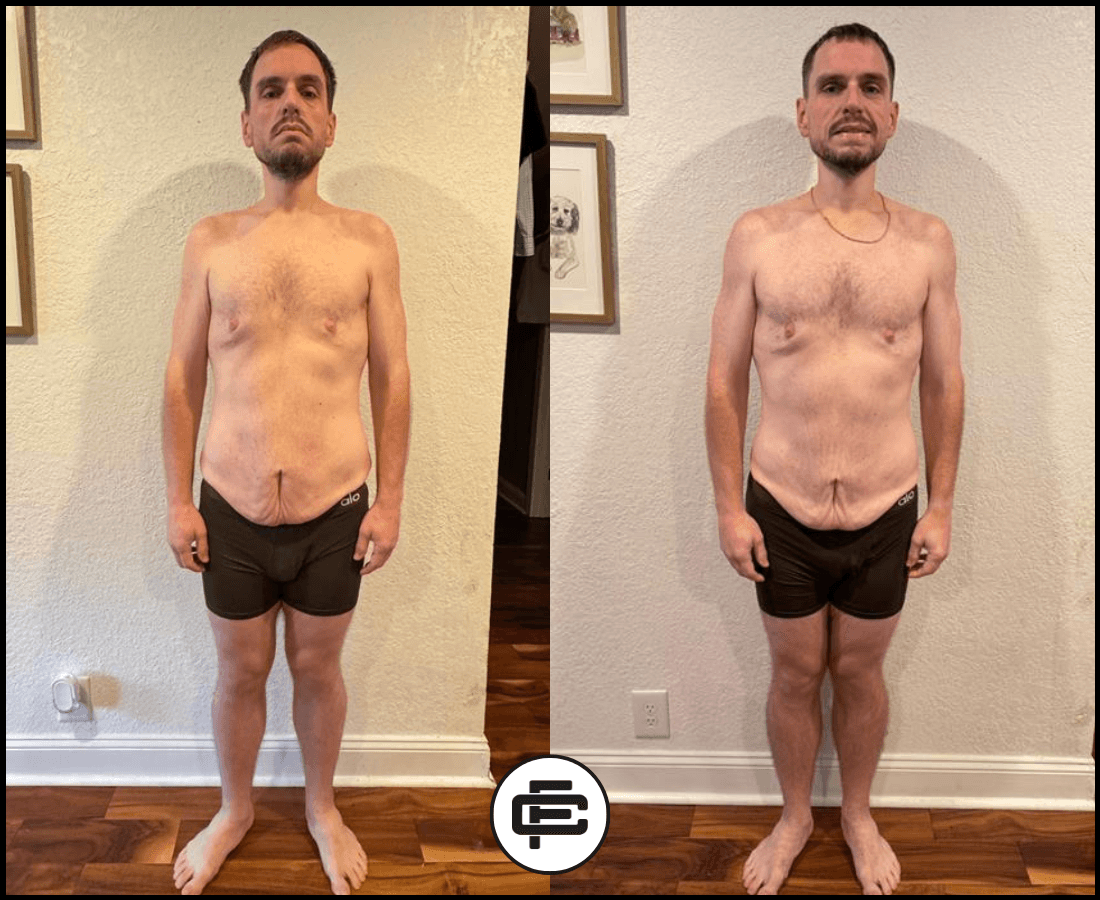
If effort alone got you there, you’d already be done. One more diet wasn’t going to do it either. The question now is what to do differently.